When replacement is the right call
A roof earns replacement in one of three ways in DFW: storm damage extensive enough that repair cannot restore the system, age (asphalt shingles in North Texas heat realistically serve fifteen to twenty years, not the number on the wrapper), or a pattern of repairs that keeps returning because the underlying system is done. An honest inspection sorts out which situation you are in; plenty of roofs we look at need a repair, not a replacement, and we say so.
How a replacement actually runs
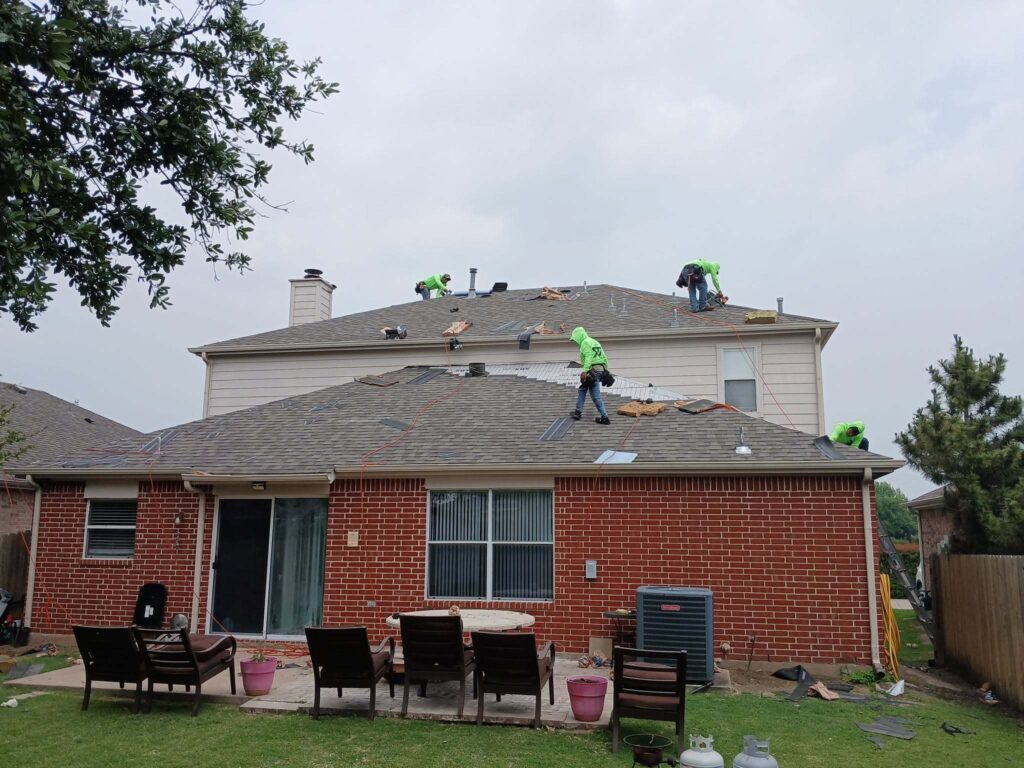
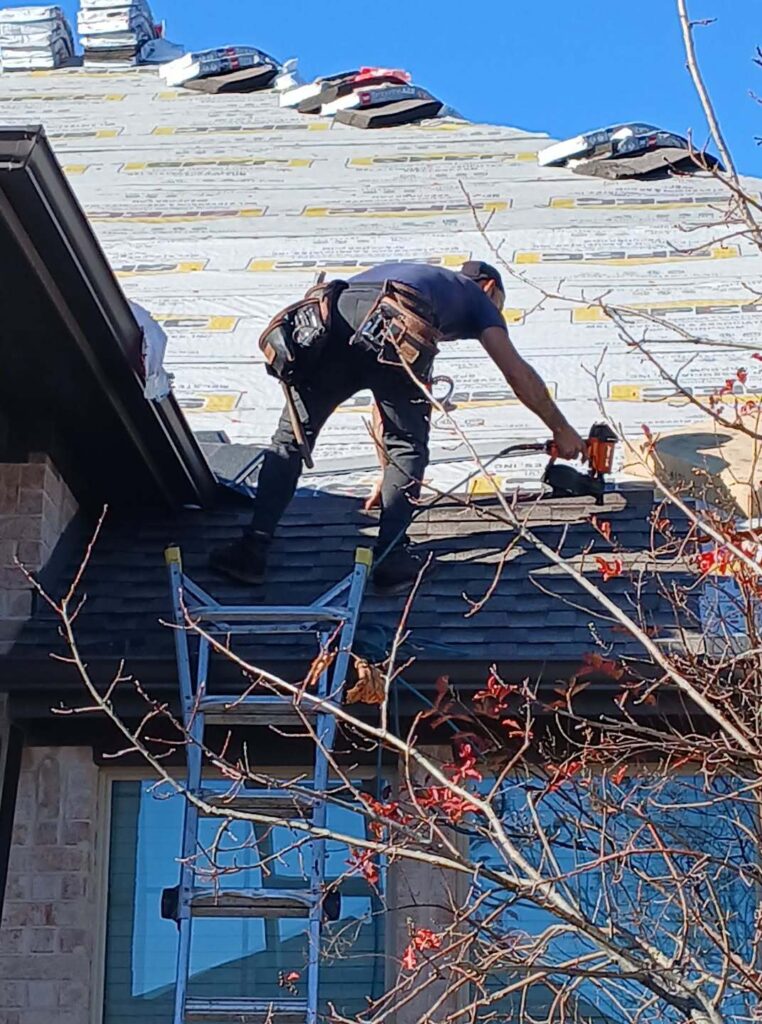
A typical single-family asphalt replacement is a one-to-two-day job once materials are staged. Tear-off comes first, all the way down to decking, because overlaying new shingles on old ones hides decking problems and shortens the new roof’s life. Decking gets inspected board by board; rotten sections are replaced and documented with photos before anything covers them. Then come underlayment, ice-and-water protection at the vulnerable planes, drip edge, ventilation, shingles, and flashing. The permit gets pulled and the municipal inspection scheduled where the city requires it.
What drives the price in DFW
Five things move a replacement quote more than anything else: the size and pitch of the roof (steeper costs more to work safely), the material system you choose, how many layers have to come off, the condition of the decking underneath, and code items your city requires. Two identical-looking houses can price differently because one has two old layers and rotten decking and the other doesn’t. A written, itemized estimate should show you each of these. If a bid is one number on a page, ask why.
Materials: what works in North Texas
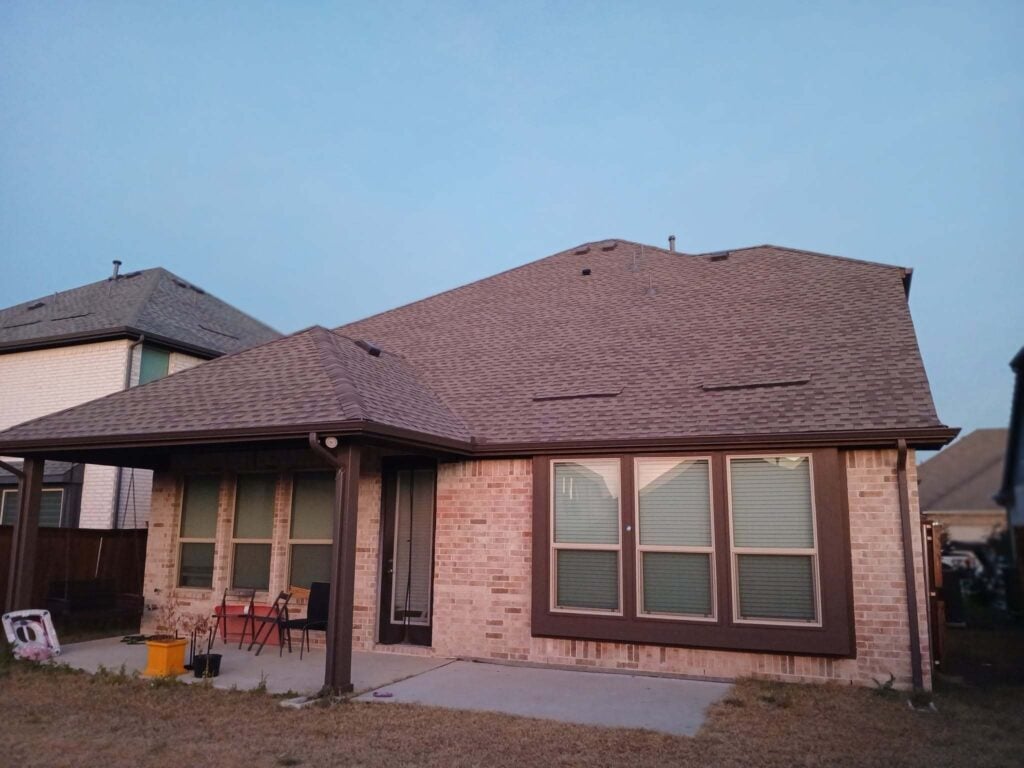
Asphalt architectural shingles remain the DFW workhorse, and impact-rated Class 4 versions matter here more than in most markets; many Texas insurers offer premium discounts for them because of our hail exposure. Metal systems trade higher upfront cost for much longer service life and better hail resilience. Tile and synthetic systems serve specific homes and budgets. Each has its own guide on this site, and each guide covers cost drivers, lifespan, and hail performance honestly.
Insurance replacements vs. retail replacements
Roughly speaking, DFW replacements happen two ways: you choose to replace (retail), or a storm decides for you (insurance). They run on different timelines and different paperwork. For storm claims we document the damage, provide the itemized estimate, and meet your adjuster on-site to answer construction questions. We are not a public adjuster: we do not interpret your policy or negotiate your claim value, and Texas law requires you to pay your deductible. Anyone who offers to waive it is putting your claim and their license at risk.
What can change mid-job, and how we handle it
The honest part of replacement quoting is the deck: nobody sees it until tear-off. Rotted or delaminated decking gets replaced at the per-sheet price written into your contract up front, never invented on the roof, and we photograph what we find before covering it. Weather is the other variable; DFW forecasts earn their reputation. Crews dry-in exposed sections before leaving any day, and if a front moves in mid-tear-off, the roof is papered and watertight before anyone climbs down. A replacement that starts should never leave you more exposed than the old roof did.