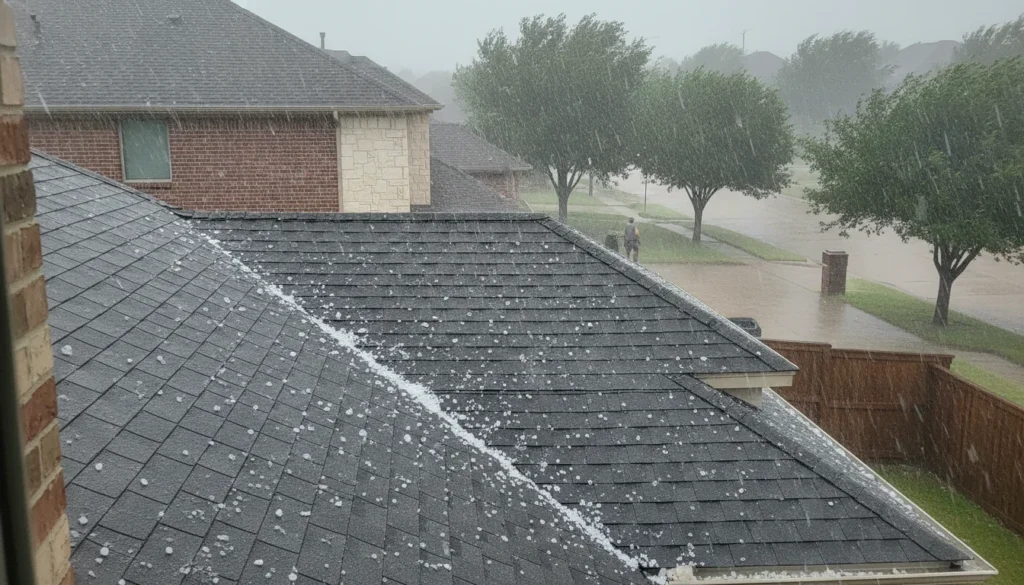
North Texas sits in the most hail-active corridor in the United States, and the Dallas–Fort Worth metroplex is its population center, with more roofs under more hail than anywhere else in the country. Most DFW roofs never age out; they get taken out. This guide covers what the hail here actually is, what it does to each roofing material, how to read your own roof after a storm, and the mistakes that cost homeowners real money every season.
The hail climate, honestly stated
DFW’s hail engine is a geography accident: Gulf moisture meeting dry air off the Caprock over flat terrain that lets supercells organize. The season concentrates from March through June, with a smaller fall window, and the metroplex reliably takes multiple damaging events per year somewhere in its footprint. The region’s scale is what makes it historic: the Mayfest storm of May 5, 1995 put softball-sized hail over an outdoor festival in Fort Worth and stands among the costliest hailstorms in U.S. history, and the April 11, 2016 storm over Wylie drove hail up to softball size through thousands of roofs in a single evening. Those are the famous ones. The forgettable ones, the quarter-to-golf-ball events that bruise a few thousand roofs and make the news for an evening, are the ones that quietly total the most shingles.
What hail size actually means for your roof
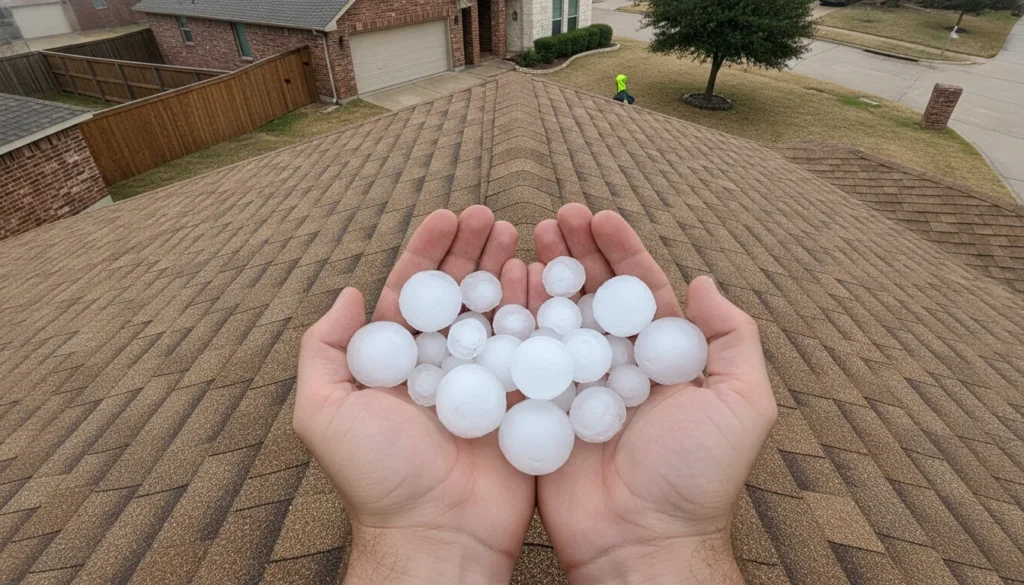
The damage thresholds are rougher than folklore suggests, but real: below quarter size, healthy asphalt roofs mostly shrug, aged ones start bruising. Quarter to golf ball is the workhorse damage range: granule crushing, mat bruising, and the fractures that leak two winters later. Golf ball to tennis ball damages most residential materials outright: shingles bruise and crack, aged cedar splits, tile fractures, metal dents. Beyond that, in the baseball-and-up events DFW manufactures somewhere most years, nearly everything takes functional damage except the heaviest-gauge metal, and even that dents visibly. Wind matters as much as size: hail arriving on a 60-mph gust hits with far more energy than the same stone falling straight down, which is why one side of a roof is often wrecked while the other passes inspection.
Hail damage by material
Asphalt shingles take the classic bruise: granules crushed into the mat, a soft spot you can feel that photographs poorly from a distance, which is why trained inspection matters. Damage may not leak for a year or more while the fractured mat weathers open. Class 4 impact-rated shingles resist dramatically better through the common size ranges (the reason many Texas carriers discount premiums for them) but are not hail-proof; giant hail damages everything. Metal dents but rarely breaches; the insurance wrinkle is cosmetic-damage exclusions in some policies. Tile cracks under large stones, and cracked tile is a leak path. Cedar behavior depends on age: fresh shakes absorb, sun-dried old ones split along the grain. Flat commercial membranes bruise and fracture quietly, hiding crushed insulation under an intact-looking surface, which is why post-storm commercial inspections use instruments, not glances.
After the storm: the sequence that protects you
From the ground, photograph everything dated: fallen hail next to a coin or tape measure, dented gutters and downspouts, window-screen tears, granule drifts at downspout mouths. Don’t climb. Soft metal remembers the storm, and the roof evidence will still be there when a professional arrives with anchors. Book a documented inspection promptly whether or not you see damage; bruising is invisible from the driveway, and the claim clock runs regardless. Sign nothing at your door. If the inspection finds functional damage, file with photos attached and have your contractor meet the adjuster on-site. If it doesn’t, keep the dated all-clear as evidence against a “pre-existing damage” argument after the next storm.
The one upgrade the climate argues for
If you replace a roof in DFW for any reason, the hail math deserves a look at Class 4 impact-rated shingles: modest upfront premium, meaningful damage resistance through the most common hail sizes, and insurance discounts from many Texas carriers that repay the difference over the roof’s life. It’s the rare upgrade where the weather, the physics, and the actuaries all point the same direction.
The commercial-roof footnote
Everything above scales to commercial buildings with one amplifier: membrane roofs hide hail damage even better than shingles do. Bruised membranes and crushed insulation can hold dry for months and then fail in winter, after the claim window has closed and causation has become an argument. Building owners should treat any significant hail event as an inspection trigger regardless of leaks, and owners with maintenance programs already hold the pre-storm baseline that turns those claims from arguments into page-flips. The commercial hail page covers the full sequence, including the cosmetic-exclusion language spreading through commercial policies.
The bottom line
DFW roofs are consumables on a storm cycle. That’s not pessimism, it’s planning. Budget as if the roof will meet major hail during its life, because it will. Buy the Class 4 upgrade when replacement comes anyway. Document every storm with a dated inspection, including the all-clears. And treat anyone selling roof decisions at your door on storm day as exactly what the timing suggests they are. The homeowners who absorb those four sentences spend less on roofing over a decade than the ones who learn them one storm at a time.
Keep this handy
The mid-storm version of this guide fits on an index card: photograph hail next to a coin, photograph the gutters and screens, stay off the roof, sign nothing at the door, book the documented inspection this week whether or not anything looks wrong. Everything else can wait for calm weather: the material science, the claim mechanics, the Class 4 math. The index card can’t.