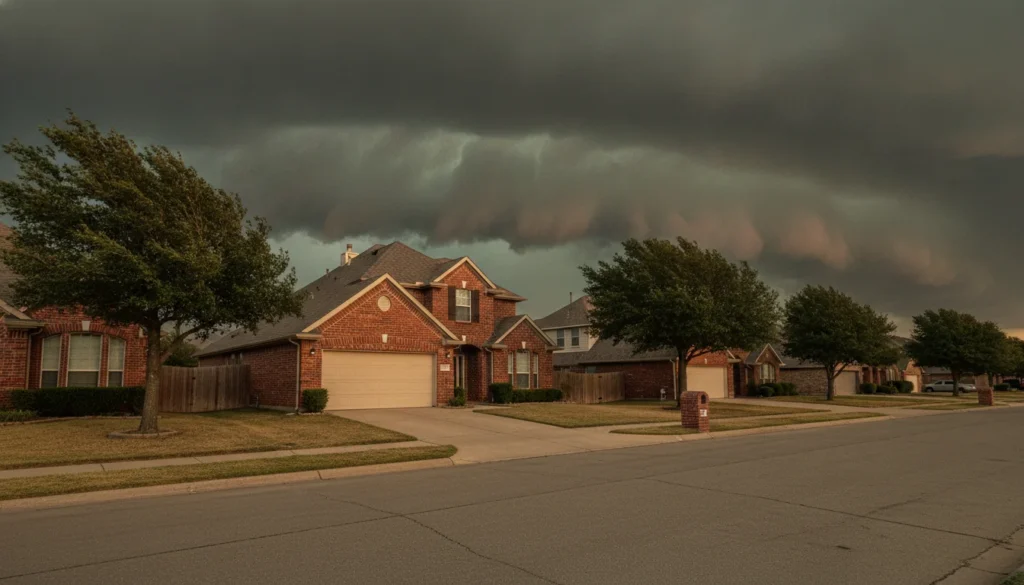
DFW is hail country: here is how to respond to a storm
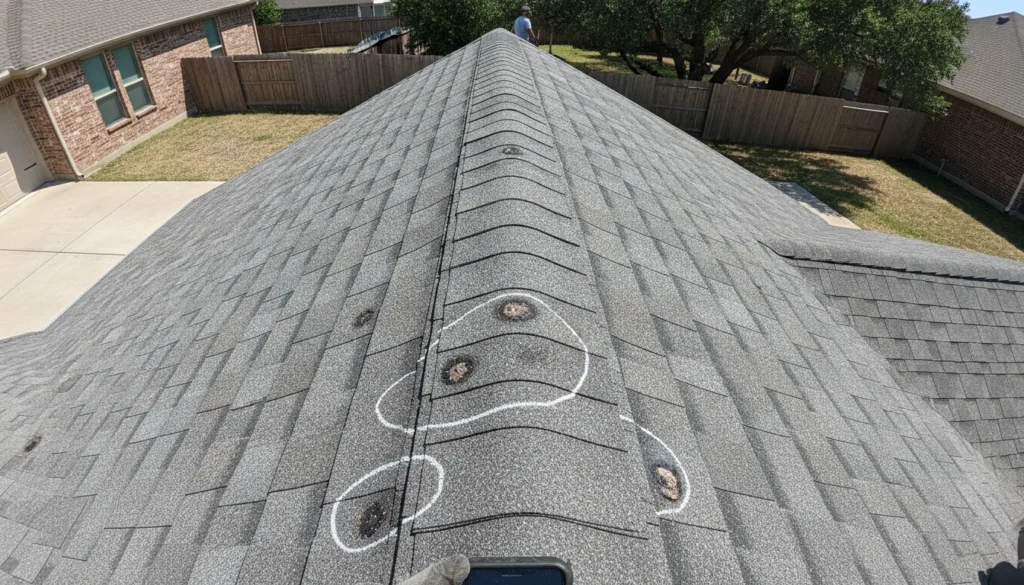
North Texas sits in the most hail-active corridor in the country. When a storm hits, the sequence that protects you is: document first (date, photos of any visible damage, interior stains), stop active leaks with proper tarping, get a professional inspection with written findings, and only then make claim decisions with real information. What damages a roof is not always visible from the ground. Hail bruising that shortens shingle life shows up on close inspection, not from the driveway.
The storm-chaser problem, plainly
After every major DFW hail event, out-of-area crews flood the neighborhoods. Some are legitimate; the pattern to avoid is anyone who knocks on your door offering to “waive your deductible” (that practice is illegal under Texas law and puts your claim at risk) or pressures you to sign an assignment before an inspection has even documented anything. A local company will still be here when the warranty matters.
What we do, and the line we don’t cross
We document damage with photos and measurements, provide written repair or replacement estimates, and meet your adjuster on-site to answer construction questions. We are not a public adjuster: we do not interpret your policy, negotiate your claim value, or advocate on coverage. That line exists in Texas law and it exists on this website.
The claim process, step by step
Storm restoration is a documented sequence, and knowing it beats improvising it. First, the inspection: free, photographed, and honest. If your roof took cosmetic scuffing but no functional damage, we say so, because filing a weak claim costs you a claim slot and helps no one. Second, if damage is real, you file with your carrier (you, not us; it’s your policy) and we provide the photo documentation and a written scope. Third, the adjuster meeting: we attend on-site so the person who found the damage is standing next to the person pricing it, speaking the same Xactimate language. Fourth, scope reconciliation. Supplements happen when adjusters miss items, and they’re negotiated with documentation, not volume. Fifth, the build, permitted and warranted like any other job. We are not public adjusters and don’t play one; we’re the contractor whose evidence keeps your claim honest.
How to read your own roof after a storm
From the ground, look for: shingles in the yard or creased tabs on the slopes, granule drifts at downspout mouths, dented gutters, downspouts, and mailbox (soft metal remembers hail the roof might hide), and window-screen tears on the storm side. What you can’t see from the ground is bruising: hail’s signature is a soft spot where granules crushed into the mat, invisible at distance and exactly what an experienced inspector reads. Resist the ladder; that’s what we’re for, and it’s free.
The storm-chaser field guide
After every DFW hail event the metroplex fills with out-of-town trucks. The tells are consistent: door-knocking within hours, pressure to sign an “assignment” or contingency on the spot, offers to “handle” or waive your deductible (illegal under Texas Insurance Code Chapter 707, and a legal risk to you as well), and no local address you could visit a year later when the warranty question comes up. The defense is equally consistent: sign nothing on storm day, verify a local footprint, and let your carrier’s timeline set the pace, not a stranger’s urgency. Your policy gives you time to choose your contractor. Use it.