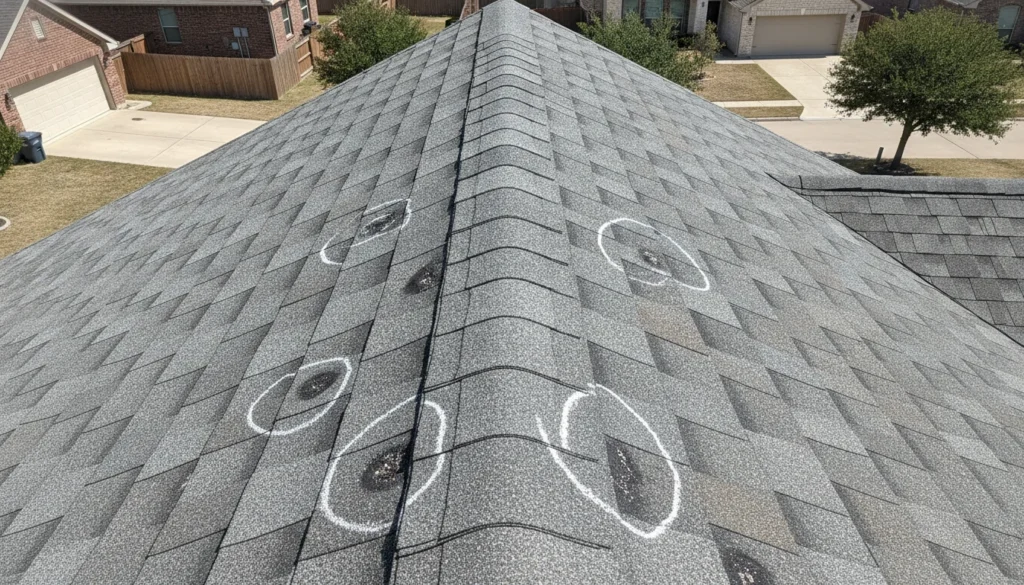
What a real inspection covers
Shingle condition and remaining life, flashing at every penetration and wall plane, decking as visible from the attic, ventilation adequacy, gutter and drainage condition, and, in this market, hail and wind evidence documented with photos. You get written findings, not a verbal opinion in the driveway.
When to get one
After any significant hail or wind event; before buying or selling a home; when a ceiling stain appears; and as routine due diligence every couple of years once a roof passes its first decade in DFW sun. The inspection is free, and “your roof is fine” is a result we deliver regularly.
What the inspection actually covers
A real inspection is a system check, not a glance at shingles. On the roof: field condition (granule loss, bruising, blistering, brittleness), every penetration (pipe boots, vents, flues), flashing at chimneys, walls, and valleys, ridge and hip lines, and the fastener discipline of whoever worked up there last. At the edges: drip edge, fascia condition, and gutter health, including the granule drifts that quietly report field wear. In the attic where access allows: decking from below, ventilation performance, daylight where there shouldn’t be any, and the stain history that tells the roof’s story better than the homeowner’s memory. Every finding gets photographed; you see what we see.
What you get, and what it costs
Written findings with photos; a straight assessment, whether that’s repair, monitor, replace, or “your roof is fine,” which we deliver regularly; and a scope with numbers only if work is actually warranted. The inspection itself is free, with no obligation attached. The economics work because some inspections become jobs; the honesty works because the ones that don’t become jobs become referrals.
When an inspection earns its keep
Four moments, in rough order of urgency: after any hail or wind event that crossed your area, since the claim clock runs whether you look or not. Before buying or selling a home, because a roof’s condition moves five figures of negotiation, and general home inspectors check roofs from a distance our people don’t. At the two-decade mark, when planning beats reacting. And before any warranty or listing deadline where documented condition matters. Between those, the roof mostly asks to be left alone, which is another thing an honest inspection will tell you.
How the free inspection stays honest
A free inspection is only worth what its incentives allow, so it’s fair to ask how ours stay straight. The answer is structural: we write findings before any numbers, photograph everything we claim, and deliver “your roof is fine” verdicts routinely. An inspection business that manufactures problems doesn’t survive in a metroplex where neighbors talk and storm seasons bring real work anyway. DFW’s roofing market has trained homeowners to expect the opposite: the post-storm knock, the alarmed stranger on the ladder, the damage that always happens to be found. Our counter-offer is boring on purpose. Documented condition, straight recommendation, no urgency theater. If work is warranted the evidence will say so without embellishment; if it isn’t, you’ll have the photos proving your roof passed, which is worth keeping for your insurance file either way.
Booking is deliberately simple: a call or the form below, a scheduled window that respects your day, and no requirement that you climb anything or clear your attic beforehand. Most inspections run under an hour on site; written findings with photos follow promptly. If a storm has just moved through, book sooner rather than later. Inspection calendars compress fast after hail, and the documentation is strongest fresh.