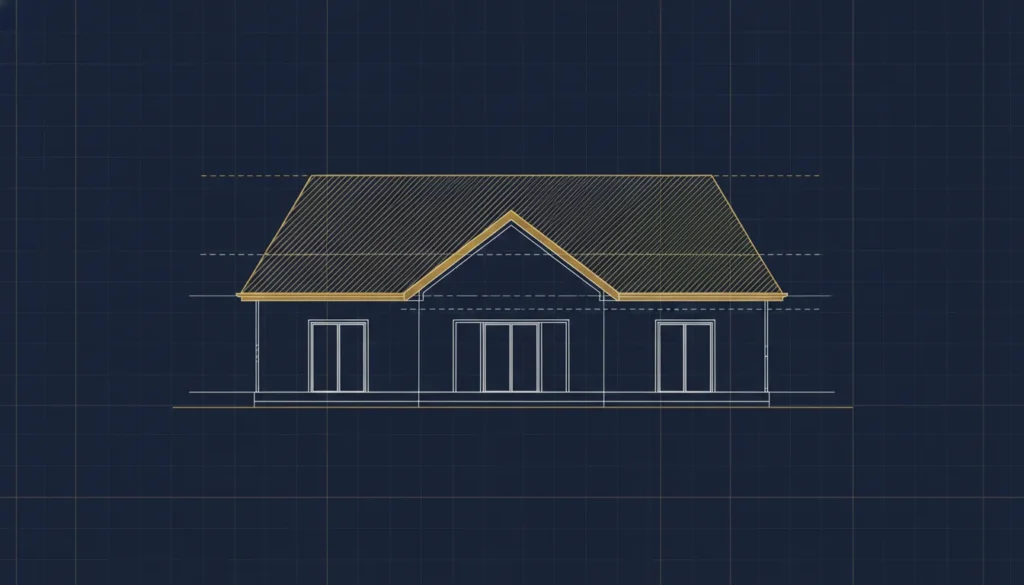
Roofing for new builds
New-construction roofing runs on a builder’s schedule and inspection sequence, not a replacement timeline. We work with builders and GCs across DFW on production and custom homes: dried-in on schedule, coordinated with the other trades, and inspected per the city’s new-construction requirements.
Roofing inside a build schedule
New-construction roofing is a coordination discipline: the roof sits on the critical path between framing and everything interior, and a roofer who misses the dry-in window stalls every trade behind him. We work to the builder’s schedule with the two milestones that matter, dry-in (underlayment down, penetrations flashed, building weatherproof so interior trades can start) and final roof-out (surfacing complete, accessories on, punch-ready). Between them we sequence around the other roof-touching trades: HVAC penetrations, plumbing stacks, electrical masts, and solar rough-ins all land better when the roofer is in the conversation before the holes get cut.
Code, inspections, and the DFW patchwork
Every DFW municipality inspects new roofs on its own schedule against its own adopted code year. Deck nailing, underlayment type, flashing details, and ventilation ratios all get checked, and the sequence differs city to city. We build to the local inspector’s checklist the first time, schedule the inspections into the build calendar, and keep the documentation the builder’s closing package needs. Ventilation deserves its own sentence: balanced intake and exhaust is the code item most often value-engineered into a future shingle-warranty problem, and we don’t build it wrong to save a line item.
Material selection when everything is on the table
A new build is the one moment material choice is unconstrained: no tear-off economics, no matching problem, framing still adjustable for weight. It’s the cheapest moment a structure will ever have for upgrading to Class 4 impact shingles (insurance discounts from day one in this hail corridor), standing seam, or tile on framing designed for it. We quote builders honest tiering, from the production-grade baseline through the Class 4 upgrade to the premium options, with the cost deltas plain, so the buyer’s upgrade conversation happens with real numbers at the design stage instead of regret at year five.
What builders get from a roofing partner, specifically
Production and custom builders judge roofing subs on four numbers: schedule reliability at dry-in, punch-list length at roof-out, callback rate in year one, and how little the super has to think about any of it. We build for those numbers, with crews scheduled to the frame inspection’s reality rather than its optimism, penetrations coordinated before the cut, local inspection sequences handled without hand-holding, and closeout documentation (permits, inspection records, warranty registrations) delivered as a package the closing file can absorb. On the buyer side, every new roof carries the same two-layer warranty as our replacement work, manufacturer coverage on materials plus our written workmanship warranty, so the homeowner’s protection doesn’t depend on which entity built the house. Builders get the schedule; buyers get the roof; both get the paper.
If you’re a builder pricing your next community or a custom GC with a set of plans, send them over. Takeoffs and tiered quotes come back promptly, with the Class 4 and metal upgrade deltas broken out so your buyers can see their options priced honestly. If you’re an owner-builder, the same service applies, with a little more explanation wherever you want it.