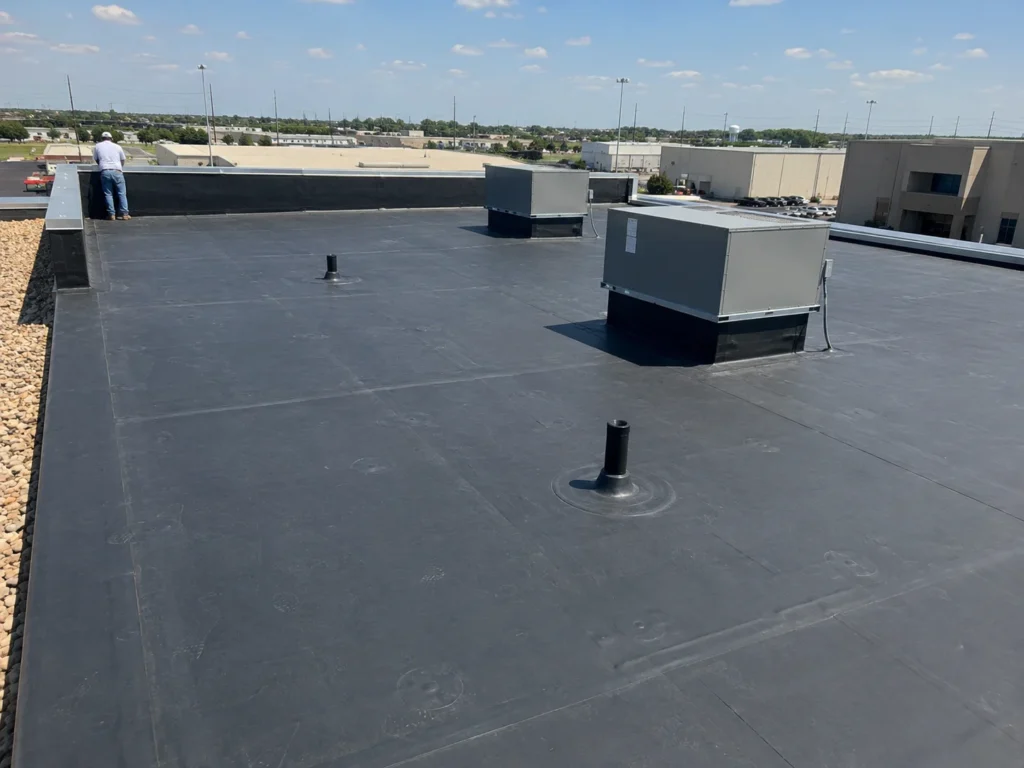
EPDM, the black rubber membrane, has the longest track record in single-ply roofing: half a century of installed history that newer membranes can only promise. Plenty of DFW buildings are wearing EPDM right now, and for many of them the smartest money keeps maintaining it rather than replacing it.
What EPDM is and why it endures
EPDM is a synthetic rubber (ethylene propylene diene monomer) supplied in very large sheets, which means fewer field seams than most systems. The material itself is remarkably stable: it tolerates UV, ozone, and thermal swings with a patience that shows up in that five-decade service history. Seams are its historical caveat. EPDM joins with adhesives and seam tape rather than welding, and seam technology is the part of the system that improved most over the decades. Modern taped seams done right are excellent; old glued seams are where aging EPDM roofs usually ask for attention first.
The black-roof question in a Texas climate
Standard EPDM is black, and black absorbs Texas sun, a real operating-cost consideration that’s pushed many new DFW installs toward white TPO. The honest counterpoints: white EPDM exists (at a premium), ballasted and shaded assemblies blunt the heat penalty, and absorption matters less on heavily insulated modern assemblies than the utility-bill folklore suggests. Where the black-roof heat penalty is real is on older, lightly insulated buildings, and those are exactly the buildings where an eventual re-cover conversation should weigh reflectivity.
Where EPDM wins today
Existing EPDM in sound condition is the headline: it repairs economically, restores well under coatings, and its longevity means “old” isn’t the same as “done.” For new work, EPDM still argues for itself where its strengths matter: large simple roofs that exploit the big-sheet advantage, owners who value the proven track record, and buildings where dark color is neutral or preferred. It also stays flexible in cold better than most membranes, which matters less in DFW than in Denver but still counts on our occasional ice weeks.
Repair and restoration economics
EPDM’s repair story is one of its best features: primed patches and modern seam tape rehabilitate old seams and punctures at costs that embarrass replacement quotes. A systematic seam-refurbishment pass, walking every seam and re-taping the tired ones, can buy an aging EPDM field years of additional service. Restoration coatings bond well to prepared EPDM and add reflectivity in the bargain, converting the black-roof penalty into a white-roof benefit without tear-off. The gating question is always moisture in the assembly below, which the survey answers definitively.
When replacement is honest
EPDM shows its endgame plainly: shrinkage pulling at flashings and corners, widespread seam fatigue that outpaces patching economics, surface crazing deep enough to threaten the sheet. When the membrane’s bones are done, we say so. From there, the replacement conversation weighs TPO’s reflectivity against fresh EPDM’s track record on the merits of your building rather than fashion.
How we assess an existing EPDM roof
An EPDM assessment walks every seam; that’s where the story is. We document seam condition across the field, check shrinkage tension at perimeters and penetrations, probe suspect areas, and map any ponding against the drainage design. Core samples and a moisture survey follow where the surface evidence warrants, because the restore-versus-replace fork turns entirely on what’s wet underneath. The deliverable is written findings with photographs, sorted into three buckets: what needs attention now, what belongs on a watch list, and what’s aging normally. From there the options get priced honestly: seam refurbishment and targeted repairs if the field is sound, a restoration coating if the assembly is dry and the economics favor it, replacement if the membrane’s bones are done. Owners are frequently surprised by how often the answer is the cheapest bucket: EPDM’s repairability means an aging black roof with tired seams is usually years of serviceable life away from a tear-off, and our job is to document that honestly rather than quote past it.