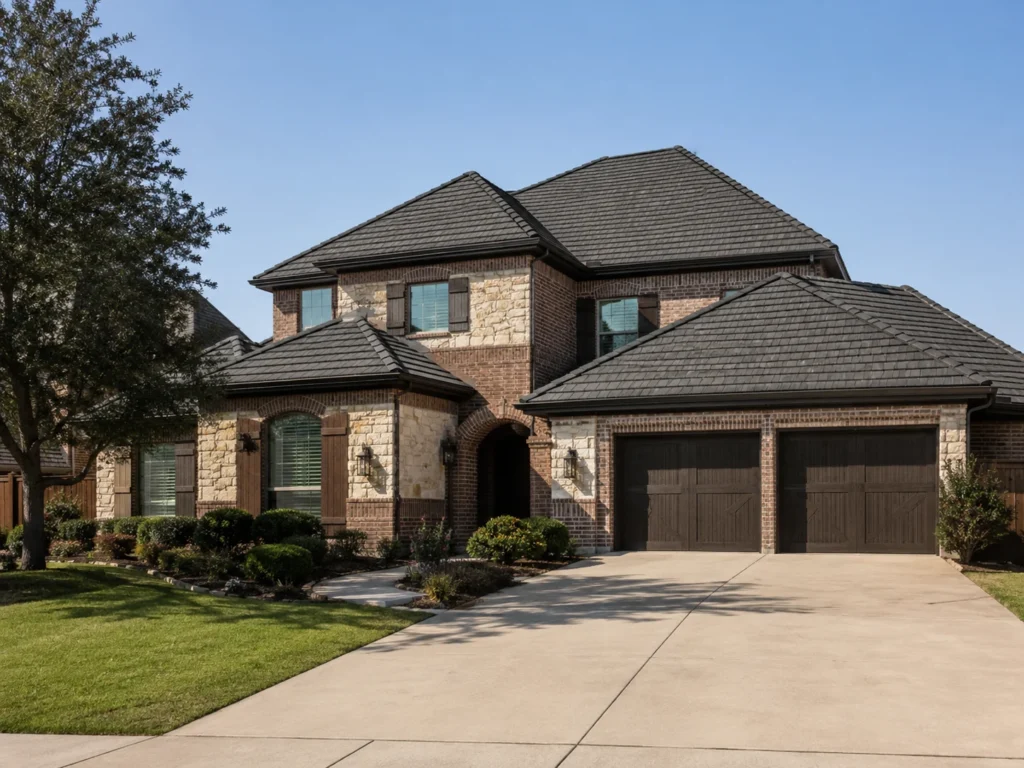
The synthetic category exists because slate’s weight and cedar’s maintenance stop many Lowry Crossing homeowners who love those looks. Engineered polymer tiles solve both: a fraction of slate’s weight, none of cedar’s feeding schedule, and Class 4 impact ratings across most product lines. The honest trade is authenticity up close and a shorter track record than the centuries-old materials they mimic.
We install and service composite / synthetic roofing across Lowry Crossing and the surrounding DFW communities. Expect free written estimates, documented inspections, and honest guidance on whether this system actually fits your home and budget.
The Lowry Crossing specifics
Every city wears this system a little differently, and Lowry Crossing is no exception. Out here lot sizes stretch and rooflines get more individual; the inventory runs from older farm-town stock to brand-new builds on the same road. On those houses, composite is the pragmatic route to a premium roofline: molded from real profiles, rated for the hail belt, and done with the upkeep argument.
Like the rest of Collin County, Lowry Crossing wants roofing work documented: permits where required, inspections passed. That paperwork is included, not extra. North Texas sits in the country’s most active hail belt, and polymer profiles rebound where wood splits and brittle materials crack, which is what the Class 4 rating is for. Because Plano, Frisco, and McKinney share our dispatch routes, examples of this exact system nearby are easy to arrange. When we quote it, ask for nearby addresses; a real roof with weather on it is the honest brochure.