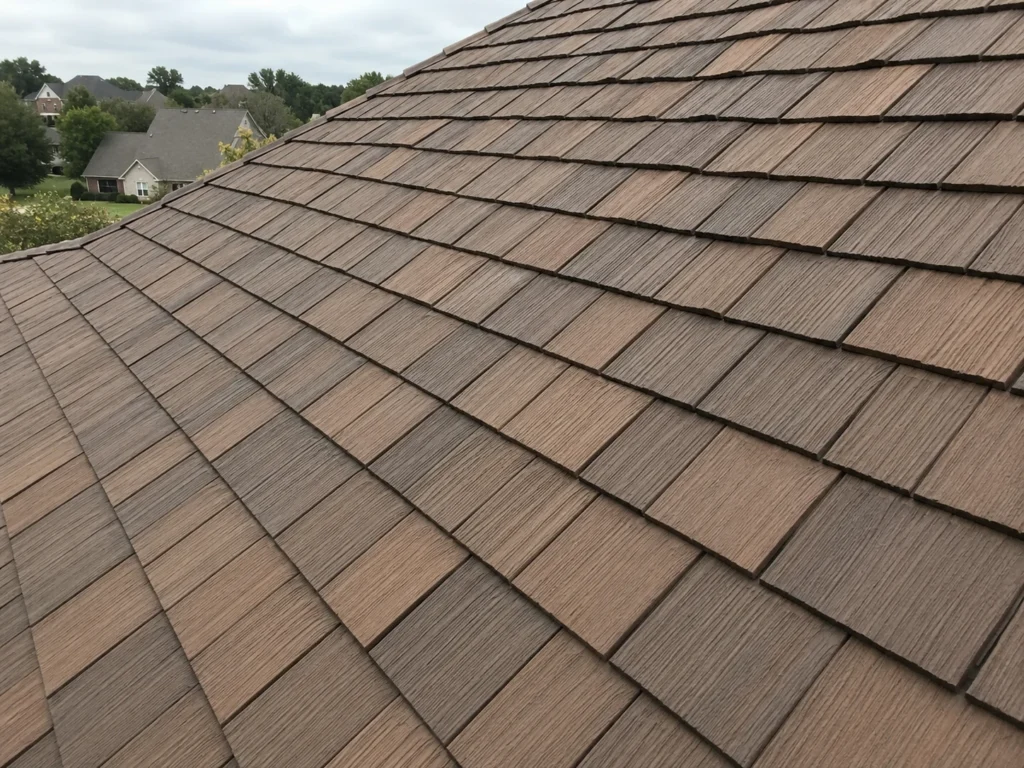
Synthetic shake is the answer to a specifically Texan dilemma: the neighborhoods that were built around the cedar-shake aesthetic sit in a climate that punishes wood and an insurance market that increasingly won’t cover it. Molded polymers cast from real split cedar deliver the texture, from the deep grain to the staggered butts to the shadow lines, with Class 4 hail ratings, Class A fire options, and a maintenance schedule of approximately nothing.
Why this product category exists
Whole DFW neighborhoods, along with their HOA architectural standards, were built on the cedar-shake look. The wood itself has been retreating for years under converging pressure: insurance carriers surcharging or declining wood roofs, fire-conscious codes, cedar’s maintenance covenant in a sun that ages it fast, and hail that splits aged shakes. Synthetic shake arrived as the release valve: a roof that satisfies shake-era HOA language and streetscape expectations while solving every one of the pressures that pushed cedar out. A significant share of our synthetic shake work is exactly this: cedar and aging shake-profile roofs converting at end of life without surrendering the neighborhood’s look.
What the material is
Quality synthetic shakes are engineered polymer, UV-stabilized through the body, molded from actual hand-split cedar so the grain texture is real wood’s, reproduced. Multiple molds, widths, and blended color variants per bundle keep the coursing from reading as repeated stamping; color runs through the material on the lines worth buying. The products install on ordinary decking with conventional nailing and ordinary labor rhythms, with no specialized craft trade and no wet saws, and they weigh in shingle territory, so the structural question that haunts tile and stone never arises.
The performance case in a hail corridor
The headline is the same one that sells synthetic slate: the leading shake products carry Class 4 UL 2218 impact ratings, the scale’s top tier, where real cedar’s hail behavior degrades with age. Fresh thick shakes absorb hits, but decade-old sun-dried wood splits along the grain. The polymer doesn’t dry out, doesn’t embrittle on cedar’s schedule, and flexes where aged wood fractures. Class 4 rating also opens the impact-rated premium discounts many Texas carriers offer, often on the same phone call where a carrier declines to write untreated wood at all. Fire performance rounds it out: leading products reach Class A as assemblies, the answer to the exact objection that’s been closing doors on cedar.
The maintenance non-schedule, and the honest limits
Against cedar’s covenant of cleaning, moss control, and re-oiling, synthetic shake’s schedule is inspection and gutter-keeping, full stop. No preservation cycle, no graying you didn’t choose (the color you buy is the color it keeps, within slow UV drift), no food for the moss and rot that shade-side cedar hosts. The limits, honestly: it’s a premium product priced well above architectural shingles; the material meets a practiced hand differently than wood up close, even as it defeats the curb view; longevity is warranted at 50 years limited with field records a few decades deep, strong but not yet centennial; and manufacturer quality varies enough that brand selection is a genuine decision. Cheap synthetic shake fades and chalks in Texas sun; the lines we quote have the field history to back their paper.
How the DFW decision usually runs
The choice is rarely synthetic-versus-cedar on a blank slate. It’s an aging shake roof, an insurance renewal notice, and an HOA with opinions. Synthetic shake typically wins that triangle: it satisfies the architectural language, converts the insurance conversation from surcharge to discount, and closes the maintenance ledger. Where real cedar still wins is conviction: owners who want the living material and accept its terms. We serve both answers with the same respect, and the quote we write either way names the product line, the impact and fire ratings with documentation, the ventilation details, and the two-layer warranty package that follows all our installations.