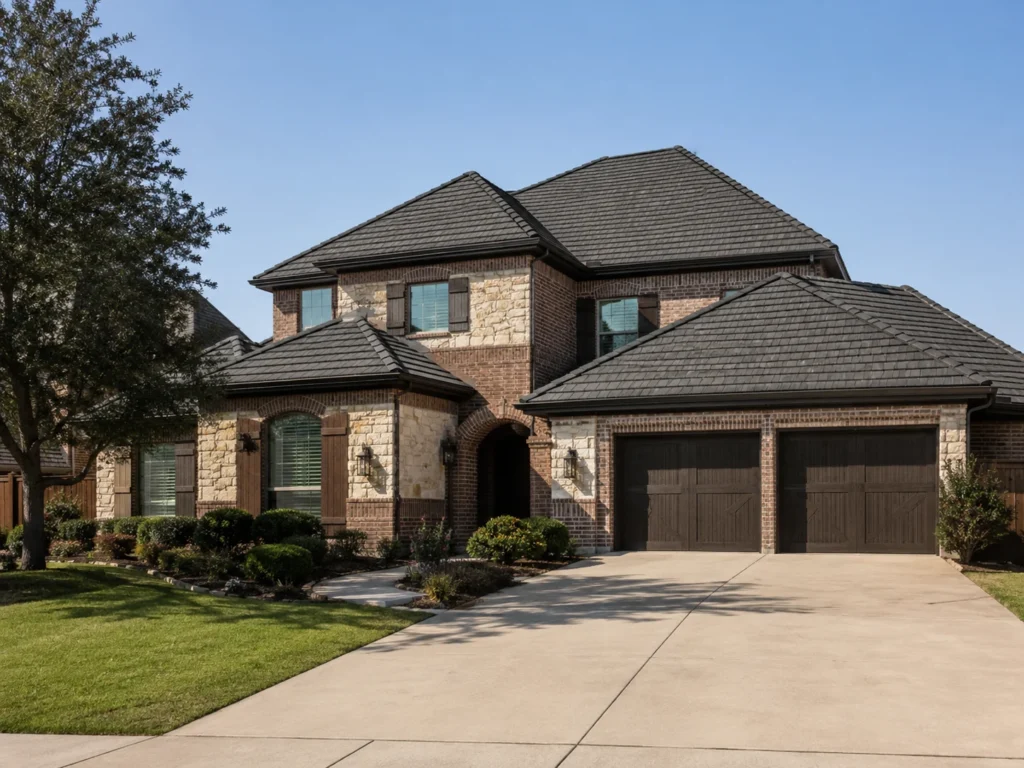
Synthetic slate exists because real slate poses two problems Texas can’t easily solve: it weighs more than most framing carries, and it shatters under exactly the hail this region manufactures. Molded from engineered polymers, often cast from actual quarried slates so the surface texture is literal, synthetic slate delivers the look at a quarter of the weight with Class 4 impact ratings, and it has quietly become the way DFW builds a slate roof that survives here.
What the material actually is
Quality synthetic slates are engineered polymer (virgin resins or high-grade composites, UV-stabilized throughout), molded in multiple widths and surface variations so the coursing reads as authentically random rather than stamped. Color runs through the body on quality lines, so a scratch or chip exposes more of the same color rather than a white plastic core, and the better systems blend several shades per bundle the way a quarry lot varies. Panels install on ordinary decking with standard nailing, cut with a knife rather than a wet saw, and walk without the eggshell anxiety of the real thing. The whole package installs faster and more forgivingly than natural slate’s specialized craft, which shows up in the labor line of the quote.
The hail argument: where synthetic beats natural at its own game
Natural slate splits under major hail; that’s not a knock on a noble material, it’s mineralogy. Synthetic slate’s polymers flex where stone fractures, and the leading products carry Class 4 UL 2218 ratings, the top of the impact scale, earned by surviving two-inch steel balls that would shatter quarried stone. In this hail corridor that reverses the usual real-versus-imitation hierarchy: the synthetic is functionally the superior slate for the climate, eligible for the impact-rated insurance discounts many Texas carriers offer, while the natural version is a recurring claim waiting for a date. We document the rating paperwork with every synthetic slate installation because the premium conversation with your carrier is part of the product’s value.
Weight: the door synthetic opens
Natural slate demands engineered framing; synthetic runs about a quarter of the load, in shingle-weight territory, which means the slate aesthetic becomes available to ordinary DFW framing without structural work. That’s the second half of why the material exists: whole categories of homes that could never carry stone can wear the look their architecture asks for. Re-roofs from asphalt to synthetic slate are a straightforward structural non-event, where the same conversation about natural slate starts with an engineer.
The honest limits
Synthetic slate is a premium product, well above architectural shingles, if comfortably below natural slate installed on reinforced framing. Longevity claims deserve calibration: manufacturers back 50-year limited warranties, and the leading products’ track records now run a few decades. That is excellent, but not the century of proven quarried stone. Up close, a practiced eye can tell polymer from stone (the thermal feel, the edge detail), though from the curb the cast-from-real-slate texture defeats nearly everyone. And product quality varies by manufacturer more than buyers expect: UV stabilization chemistry and color-through consistency are where cheap lines cut, and where a decade of Texas sun finds them. Brand selection is a real decision here, not a formality.
Where it lands in the DFW calculus
The buyer profile: homes whose architecture calls for slate (Tudor, French provincial, historic-adjacent estates) on framing that won’t carry stone, owned by people done with the hail-claim cycle. Against its alternatives: natural slate wins provenance and the century, loses the hail war and the structural math; Class 4 asphalt wins price, loses the aesthetic entirely; stone-coated steel competes on impact rating with a different look. For the slate look in this climate, the synthetic is usually the honest recommendation, and we make it with the reasoning shown.