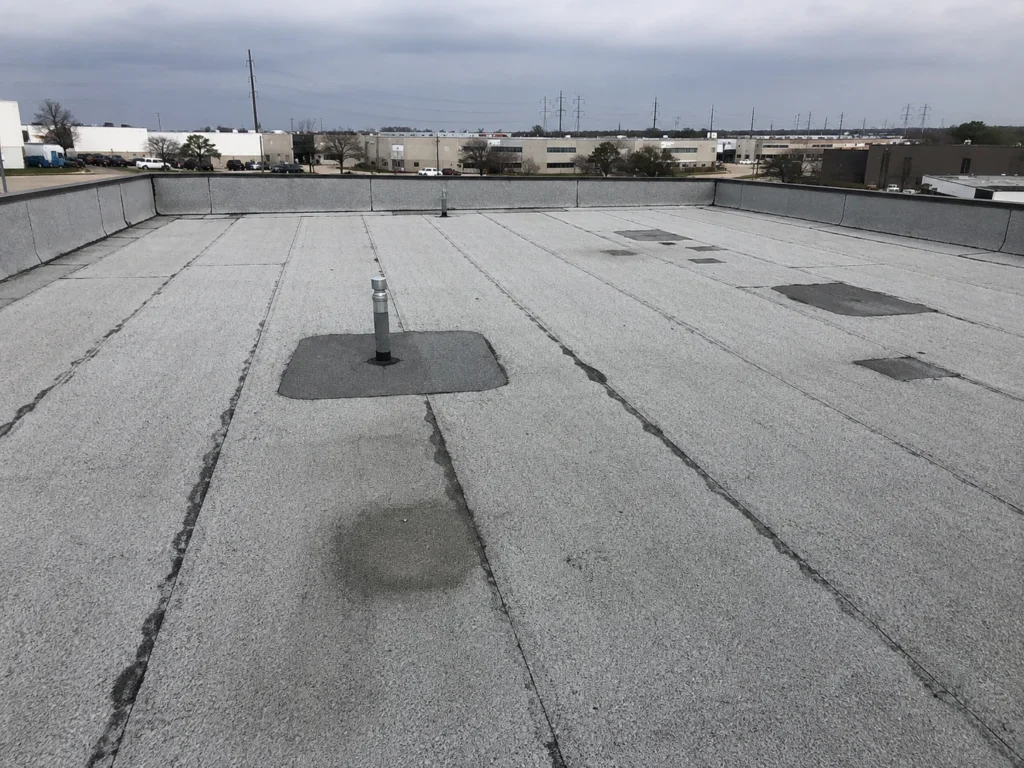
Mod-bit’s argument on McKinney buildings is layers: two or more plies of polymer-modified asphalt build a roof with backup. A puncture must get through redundancy, not one membrane. It handles rooftop foot traffic well, which suits buildings whose roofs double as equipment yards. Modern cold-applied and self-adhered systems have retired most of the old torch-down fire concerns.
We install and service modified bitumen roofing across McKinney and the surrounding DFW communities: free written estimates, documented inspections, and honest guidance on whether this system actually fits your home and budget.
On the ground in McKinney
In McKinney, the Modified Bitumen Roofing conversation usually starts with the roof that is already up there. A large share of homes here are young enough that their original builder-grade roofs are only now meeting their first serious hail test. That building stock puts membranes to work: seams, penetrations, and drainage patterns matter more than brand names, and the moisture survey decides restore-versus-replace.
Like the rest of Collin County, McKinney wants roofing work documented, meaning permits where required and inspections passed. That paperwork is included, not extra. North Texas sits in the country’s most active hail belt, and single-ply shows bruise fractures that a chalk circle will not catch; instrument surveys find what walking the roof misses. Because Plano, Frisco, and Allen share our dispatch routes, examples of this exact system nearby are easy to arrange. Once we have looked at the actual roof, everything above gets specific and goes in writing.