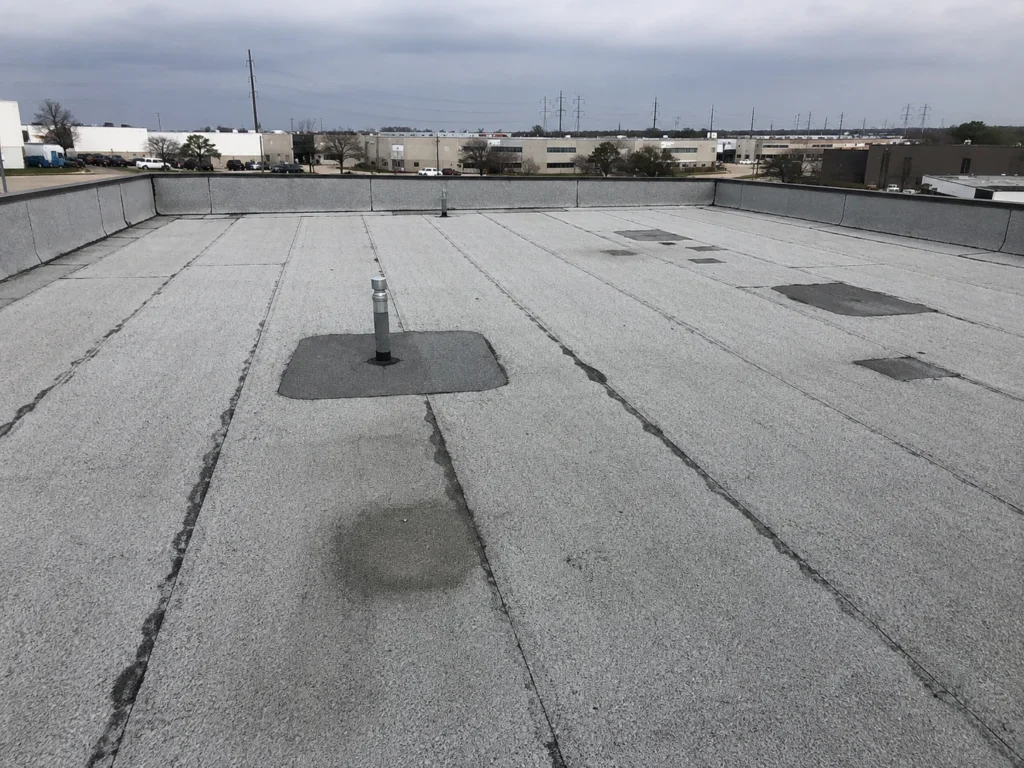
Modified bitumen, or mod-bit, is asphalt roofing rebuilt for low slopes: polymer-modified sheets applied in overlapping plies, producing a roof with built-in redundancy and a toughness under foot traffic that single-ply membranes can’t match. On DFW buildings whose roofs work for a living, mod-bit is frequently the right specification.
What “modified” means
Two polymer families define the category. APP (atactic polypropylene) modifies asphalt toward plastic behavior: stiffer sheets, historically torch-applied, strong UV tolerance. SBS (styrene-butadiene-styrene) modifies toward rubber, producing flexible sheets that handle movement and cold, applied with adhesives, self-adhering backings, or hot asphalt. The polymer choice tunes the roof to the building; both arrive as factory-made sheets with granulated or smooth surfaces, and both build systems ply by ply.
The multi-ply argument
Mod-bit’s core proposition is layers. A two-ply system puts a full waterproof sheet under another full waterproof sheet; punctures must find their way through redundancy, not one membrane. That’s why mod-bit shines on roofs that double as equipment yards: hotel and hospital roofs crowded with mechanical units, buildings where service techs walk weekly. Where a dropped tool means a work order on single-ply, on mod-bit it usually means nothing at all. Granule surfacing adds UV armor and traction on top.
The torch question, answered honestly
Torch-down built mod-bit’s reputation and its fire-safety baggage. Modern practice has mostly moved on: self-adhered sheets and cold-process adhesives install without open flame, and we default that direction, especially on occupied buildings and anywhere near combustible decks. Where torch application is genuinely specified, certified crews and mandatory fire-watch protocols aren’t negotiable. Any bidder torching without a documented fire-watch is telling you what their other corners look like.
Mod-bit in North Texas
DFW’s thermal swings favor SBS flexibility; our sun favors granule-surfaced or reflective-coated caps. Hail treats mod-bit comparatively kindly. The multi-ply mass and granule armor absorb impacts that stress single membranes, which is one reason older mod-bit roofs across the metroplex keep passing storm inspections. Reflectivity is the honest weakness: standard granulated caps run darker and warmer than white single-ply, and where cooling load matters, reflective cap sheets or a white coating over sound mod-bit closes most of the gap.
Repair, restore, replace
Mod-bit repairs in kind, with patches that ply into the system, and its restoration story is strong: aged-but-sound mod-bit is one of the best coating substrates there is, taking silicone or acrylic systems that add reflectivity and years. End of life announces itself with widespread granule loss, exposed and cracking cap sheets, and blisters that outpace maintenance. As always, the moisture survey decides restore-versus-replace before any quote means anything.
How we scope a mod-bit project
Scoping modified bitumen starts with the building’s workload: how much rooftop traffic, how much equipment service, what the roof is asked to survive between inspections. That drives ply count and surfacing. A two-ply granulated system covers the standard case, additional reinforcement goes where traffic concentrates, and walkway pads go on the service routes. Application method is a safety and suitability decision we make explicitly: self-adhered or cold-process by default, torch only where genuinely specified and then only with certified crews and documented fire-watch. On existing roofs, the assessment maps blisters, splits, and granule loss, and the moisture survey decides whether the right move is repair, a restoration coating over sound plies, or replacement. The written proposal names the system manufacturer, the ply schedule, the flashing details, and both warranty layers. Mod-bit rewards this kind of specificity. It’s a system built from layers and decisions, and the roofs that reach year twenty-five are the ones where every layer was chosen on purpose.