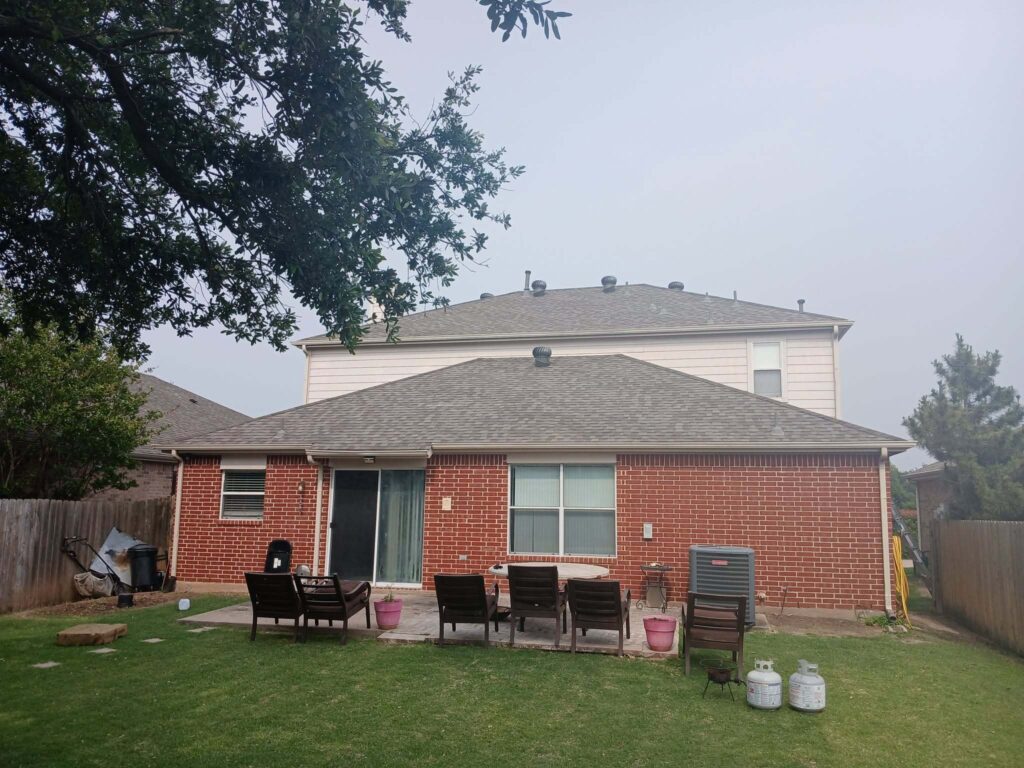
Asphalt architectural shingles, what most of DFW calls composition or comp roofing, cover more North Texas homes than every other material combined, and for defensible reasons: the strongest cost-to-performance ratio in residential roofing, installation that doesn’t require exotic skills or structural upgrades, and product tiers that scale from starter-home budgets to impact-rated systems built for hail country.
The tiers, in plain English
Shingles come in three practical tiers. Three-tab shingles are the entry point: a single flat layer, the lightest and least expensive, with the shortest service life and the least wind resistance; they survive mostly on rental properties and strict budgets. Architectural (dimensional) shingles are the DFW standard: laminated layers that add thickness, shadow-line depth, better wind ratings, and meaningfully longer service life for a modest step up in cost. Class 4 impact-rated shingles are architectural shingles reinforced, usually with polymer-modified asphalt (SBS), to pass UL 2218, the steel-ball impact standard that approximates severe hail.
In most markets the Class 4 tier is a luxury. In DFW it is frequently the rational default, for one reason: many Texas insurers discount the wind/hail portion of homeowner premiums for certified Class 4 roofs. Over a roof’s life, that discount plus avoided storm damage often outruns the upgrade cost. Our Class 4 guide covers the math and the products.
What we install: CertainTeed and GAF
We primarily install CertainTeed and GAF systems, the two manufacturers whose products, availability, and consistency we trust most for North Texas conditions, across standard, Class 3, and Class 4 tiers. Manufacturer warranties on these lines typically run 30 to 40 years (limited) on shingles and around 25 years on hip and ridge, varying by product tier.
Here is the honest caveat most roofing sites skip: manufacturer warranties exclude weather damage. They protect against defective shingles (a real but narrow protection), not against the hail and wind that actually end most DFW roofs. Storm damage is insurance territory. Judge a shingle roof by the installer’s workmanship and the product tier’s hail rating more than the warranty number on the brochure.
What actually decides how long your shingle roof lasts
Four things, roughly in order. Hail history: one significant hailstorm can end a shingle roof of any age, which is why impact ratings matter here. Ventilation comes next. An under-vented attic cooks shingles from below; DFW attics hit brutal temperatures, and poor airflow can knock years off a roof while voiding parts of the manufacturer warranty. Installation quality covers nailing pattern, flashing detail, and underlayment, which decide whether the system sheds the water it was designed to shed. Then there’s sun. Eleven months of Texas UV ages asphalt on a schedule no brochure fully admits. Realistic DFW service life for a well-installed architectural roof runs fifteen to twenty years; the marketing numbers assume a milder planet.
How we install shingle roofs
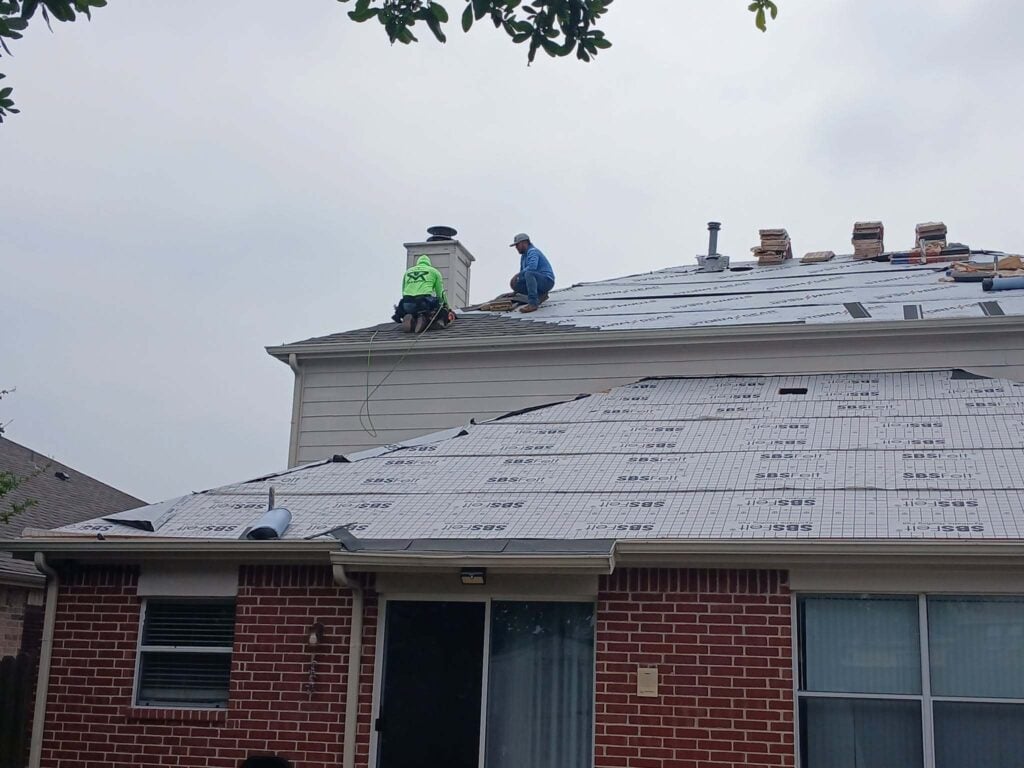
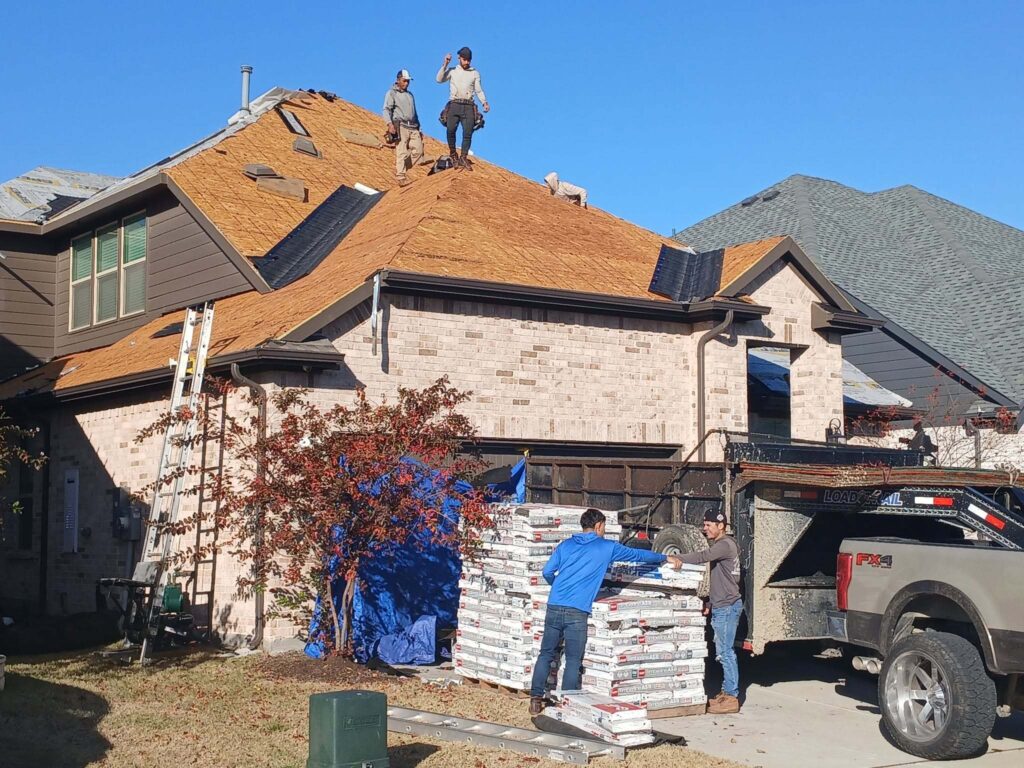
Full tear-off, not overlay. Layering new shingles over old hides decking problems, adds weight, and shortens the new system’s life. Decking gets inspected board by board and photographed; rot gets replaced and documented before anything covers it. Then synthetic underlayment, ice-and-water membrane at valleys and penetrations, new drip edge and flashing, ridge ventilation matched to the attic’s intake, and the shingles themselves nailed to manufacturer spec. Permits pulled and municipal inspections scheduled where your city requires them. The parts you’ll never see are the parts doing most of the work.
Repair or replace?
Shingle roofs repair well when the system is healthy and one area failed: wind-lifted tabs, a flashing leak, a puncture. They stop being repairable when damage is widespread (usually hail), when age has made the whole field brittle, or when repairs keep recurring. Our free inspection answers which side of the line your roof is on, with photos, and we recommend repair when repair is the honest answer.
Choosing your tier: the quick comparison
| Tier | Realistic DFW lifespan | Wind rating | Hail resistance | Insurance angle | Best fit |
|---|---|---|---|---|---|
| 3-tab | Shortest of the three | Lowest | Weakest (single layer) | None | Rentals, strict budgets, short horizons |
| Architectural | 15–20 years | Strong | Moderate, laminated build | None typically | The DFW standard for most homes |
| Class 4 impact | 15–20 years, fewer storm losses | Strong | Best available (UL 2218 rated) | Wind/hail premium discounts with many Texas carriers | Hail-prone areas, which is all of DFW |
The pattern worth noticing: the tiers don’t differ much on calendar lifespan, since DFW sun ages them all. Where they differ is how they die. Storms end most North Texas shingle roofs early, and impact rating is the only tier variable that changes that outcome.
Reading a shingle quote like a pro
An honest shingle estimate itemizes six things: tear-off (with layer count), decking allowance (priced per board or sheet, since nobody knows what’s under there until it’s open), underlayment and ice-and-water coverage, the shingle product by name and tier, ventilation work, and flashing detail. If a bid is one number on a page, you’re not looking at a cheaper roof. You’re looking at less information. Compare bids line by line and the “cheap” one usually reveals where it got cheap: economy underlayment, reused flashing, no decking allowance, or a product tier below what was discussed. We put every line in writing precisely so this comparison is easy to make against anyone.
Color, heat, and those black streaks
Two Texas-specific notes on shingle selection. Lighter colors absorb less heat, and on a DFW roof that spends summer above 140°F, color choice has a measurable comfort and cooling-cost effect. And the black streaking on so many area roofs is algae, not dirt: modern algae-resistant granule lines from CertainTeed and GAF embed copper that suppresses the growth for years. If streaks bother you, specify AR granules at replacement time. Pressure-washing an asphalt roof to remove streaks strips granules and shortens its life, which makes prevention the only good answer.