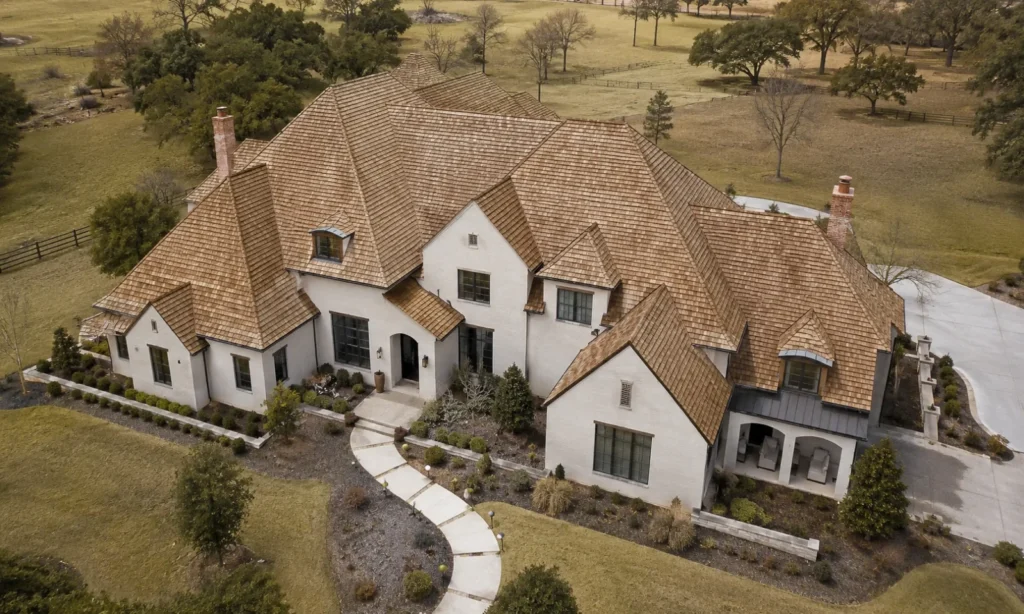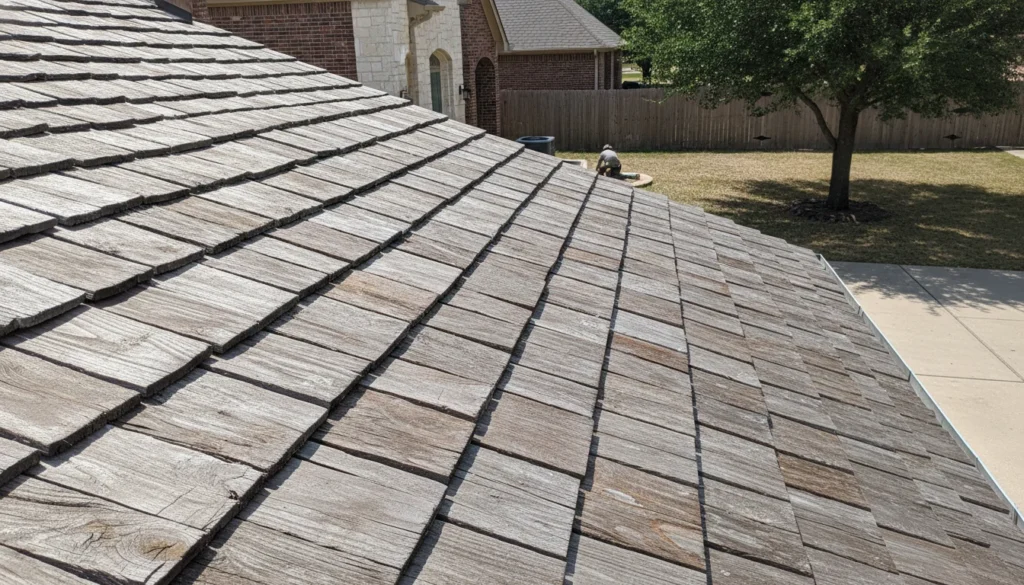
Cedar shake and shingle roofs, which many owners simply call wood roofs, offer a warmth and character no manufactured product fully reproduces, and they age the way good materials do: into individuality. They also demand more of both installer and owner than any other residential system we work on. This guide is the honest version of both halves.
Shakes, shingles, and the two cedars
The vocabulary first. Shakes are split from the log: thick, textured, rustic. Shingles are sawn: thinner, uniform, tailored. Same wood, different character. Then the species: Western red cedar is the default, prized for grain, workability, and natural weather resistance; when someone says cedar roof, this is almost always what they mean. Alaska yellow cedar (also sold as yellow cedar or Nootka cypress) is the denser, harder-wearing cousin that costs more and lasts longer. Within each species, grade is everything: premium heartwood grades resist decay in ways economy grades never will, and in a DFW climate the cheap grade is a false saving.
What cedar asks of you in North Texas
Cedar is an organic material in a hard climate, and it has a maintenance calendar. It wants to breathe, meaning installation over proper spaced or vented systems, because trapped moisture ages cedar in fast-forward. It wants periodic care: debris kept off, moss and algae addressed, and treatment renewals on the schedule the product line specifies. It wants honest hail expectations, since DFW hail is harder on wood than on Class 4 composites and a significant storm can mean meaningful shake replacement. Owners who love the material accept the calendar; owners who just love the look should read our synthetic shake guide before deciding, and we mean that sincerely.
Fire ratings, since Texas asks
Untreated cedar generally cannot meet the fire classifications DFW jurisdictions expect. Pressure-fire-treated cedar products exist precisely for this and carry the ratings most local codes require. Treatment is a buy-it-treated decision, not an aftermarket spray. We confirm your city’s specific requirements as part of any cedar project, before material is ordered.
What cedar costs, structurally speaking
No dollar figures here, just the drivers. Grade and species: premium heartwood and yellow cedar sit well above economy red. Shake vs. shingle: thickness and coverage differ. Fire treatment: real cost, non-optional where required. Installation system: proper ventilation detail and copper or stainless fasteners (plain steel stains cedar) are part of doing it right. Labor: cedar rewards craftsmen and exposes everyone else. The labor line is where cedar quotes honestly differ.
Repair and restoration
Cedar repairs well in the hands of people who work it: individual shake replacement, ridge and valley renewal, flashing rework, and restoration cleaning-and-treatment cycles that add years to a field that still has life in it. The restore-or-replace judgment call comes down to how much of the field retains sound wood, and it’s a call we make with photos in hand, not from the driveway.
Your three shake-look options, honestly compared
| Western red cedar | Alaska yellow cedar | Synthetic shake | |
|---|---|---|---|
| Character | The authentic default; ages into individuality | Denser, silvers to even gray | Uniform, cast from real shakes |
| DFW lifespan | 20–30 years, maintenance-dependent | Longer (the density dividend) | Decades, warranty-backed |
| Maintenance | Real calendar | Same calendar, stretched intervals | Essentially none |
| Hail | Vulnerable | Somewhat tougher | Class 4 rated on quality lines |
| Fire | Requires pressure treatment | Requires pressure treatment | Rated without treatment |
| Cost position | Premium | Above red cedar | Comparable to premium cedar |
The restoration option most cedar owners don’t know they have
A cedar field that looks tired isn’t necessarily finished. Professional restoration can add meaningful years to a roof whose wood is still fundamentally sound: careful cleaning to remove the biological growth that holds moisture against the wood, replacement of the individually failed shakes, and a penetrating treatment renewal. The judgment call is the percentage. When scattered shakes have failed, restoration wins; when whole planes have gone soft or brittle, it’s throwing good money after old wood. We make that call with photos from on the roof, and we’ve recommended both answers many times, restoration when the wood deserves it and replacement when it doesn’t.
How a cedar roof goes on right
Cedar installation is where the material’s reputation is made or lost, and the details are specific. The wood must breathe from below, over spaced sheathing or a purpose-made ventilating underlayment, because cedar laid tight over solid deck and felt traps moisture against the wood and ages it in fast-forward. Fasteners must be stainless steel or hot-dipped equivalents: plain steel reacts with cedar’s natural extractives and bleeds black stains through the field within a few seasons. Exposure, meaning how much of each shake or shingle shows, must match the product grade and roof pitch, because over-exposed cedar sheds water badly and under-exposed cedar wastes a third of the material you paid for. Keyways between shakes need consistent spacing for expansion; valleys need wider metal than shingle roofs use; and hips and ridges want factory-cut units, not field improvisation. None of this is exotic to crews who work cedar regularly, and all of it is invisible in a driveway estimate. That is why cedar, more than any material we install, rewards asking a bidder what their installation spec actually is.
The honest cedar conversation
We’ll install cedar with real enthusiasm for owners who want the material and understand its calendar, and we’ll say plainly when a home or an owner is better served by synthetic shake or a Class 4 shingle. That candor costs us the occasional cedar sale and earns the kind of customers who call back for twenty years. Bring us the house and the appetite for maintenance, honestly assessed, and we’ll match the roof to both.