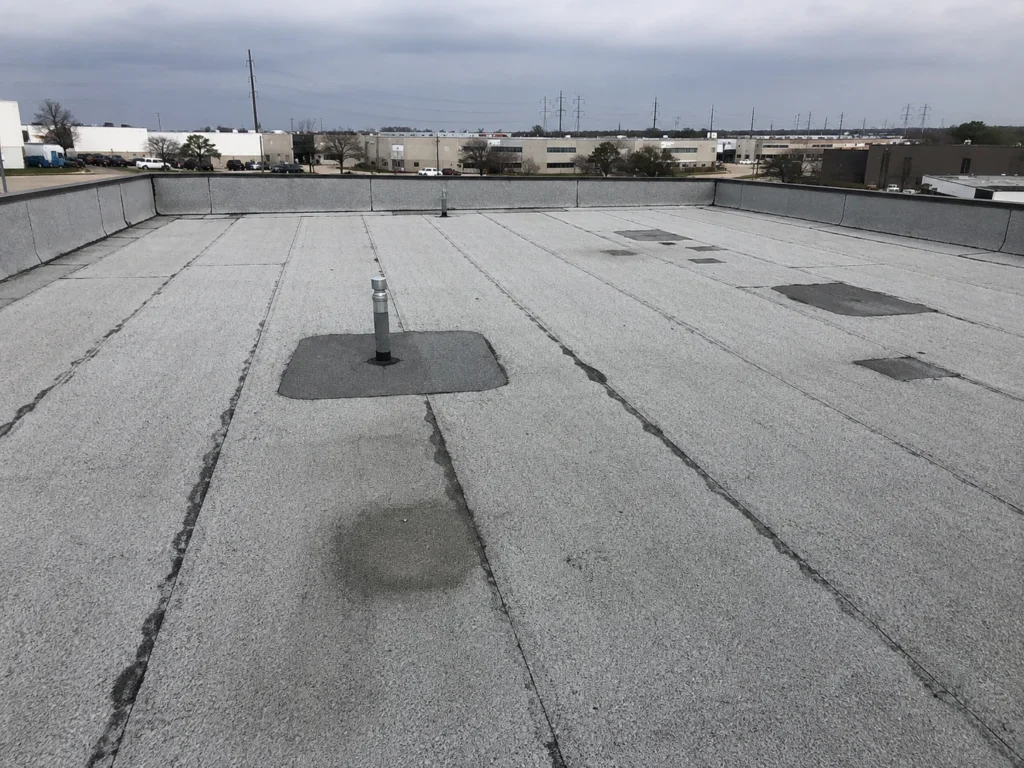
Mod-bit’s argument on Lancaster buildings is layers: two or more plies of polymer-modified asphalt build a roof with backup. A puncture must get through redundancy, not one membrane. It handles rooftop foot traffic well, which suits buildings whose roofs double as equipment yards. Modern cold-applied and self-adhered systems have retired most of the old torch-down fire concerns.
We install and service modified bitumen roofing across Lancaster and the surrounding DFW communities: free written estimates, documented inspections, and honest guidance on whether this system actually fits your home and budget.
How Lancaster changes the math
Modified Bitumen Roofing behaves differently on Lancaster roofs than the brochure version suggests. These are streets where roofs have been replaced before. That means layered history, patched decking, and flashing choices from three owners ago. On those buildings, the membrane decision is driven by what the roof does all day (equipment traffic, ponding zones, the tenant below) more than by material fashion.
City paperwork in Lancaster is ours to carry: permit filed, inspection booked, final documentation in your folder. Hail is the tax every DFW roof eventually pays. Single-ply shows bruise fractures that a chalk circle will not catch, so instrument surveys find what walking the roof misses. The install map around Lancaster includes Dallas and Irving, and seeing a five-year-old local roof beats any sample board. The next step costs nothing: a documented inspection and a straight answer on whether this system fits.