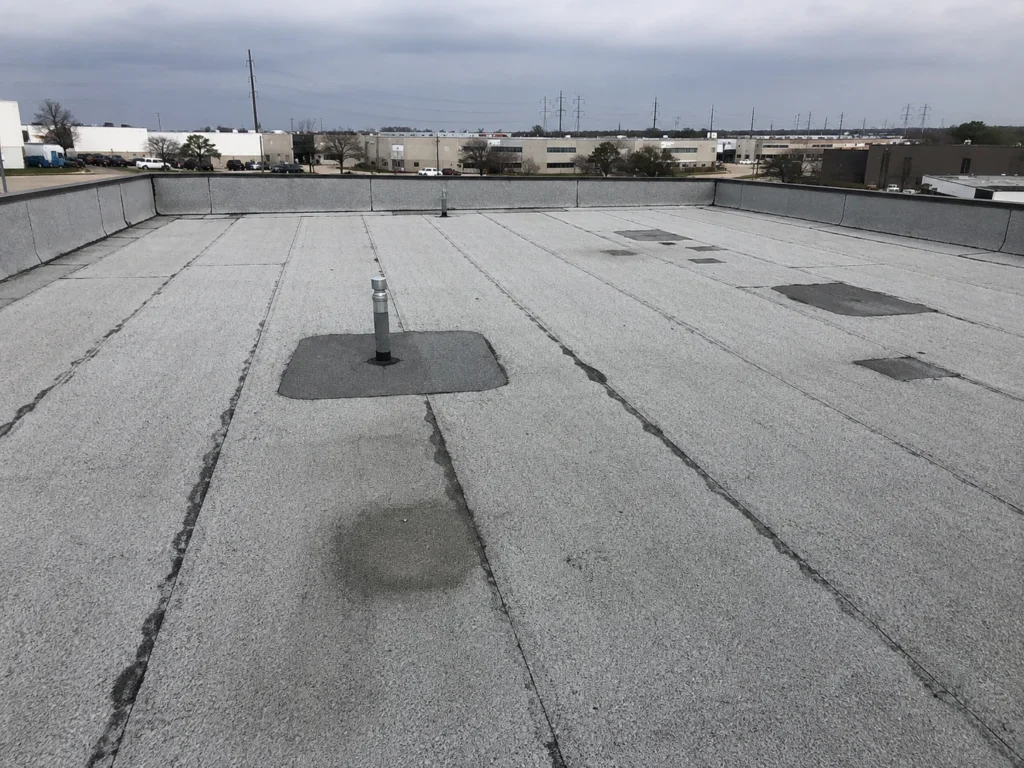
Mod-bit’s argument on Willow Park buildings is layers: two or more plies of polymer-modified asphalt build a roof with backup. A puncture must get through redundancy, not one membrane. It handles rooftop foot traffic well, which suits buildings whose roofs double as equipment yards. Modern cold-applied and self-adhered systems have retired most of the old torch-down fire concerns.
We install and service modified bitumen roofing across Willow Park and the surrounding DFW communities: free written estimates, documented inspections, and honest guidance on whether this system actually fits your home and budget.
The local case in Willow Park
Every city wears this system a little differently, and Willow Park is no exception. Out here lot sizes stretch, rooflines get more individual, and the inventory runs from older farm-town stock to brand-new builds on the same road. That building stock puts membranes to work: seams, penetrations, and drainage patterns matter more than brand names, and the moisture survey decides restore-versus-replace.
City paperwork in Willow Park is ours to carry: permit filed, inspection booked, final documentation in your folder. North Texas sits in the country’s most active hail belt, and single-ply shows bruise fractures that a chalk circle will not catch; instrument surveys find what walking the roof misses. Because Weatherford, Aledo, and Hudson Oaks share our dispatch routes, examples of this exact system nearby are easy to arrange. When we quote it, ask for nearby addresses, since a real roof with weather on it is the honest brochure.